-
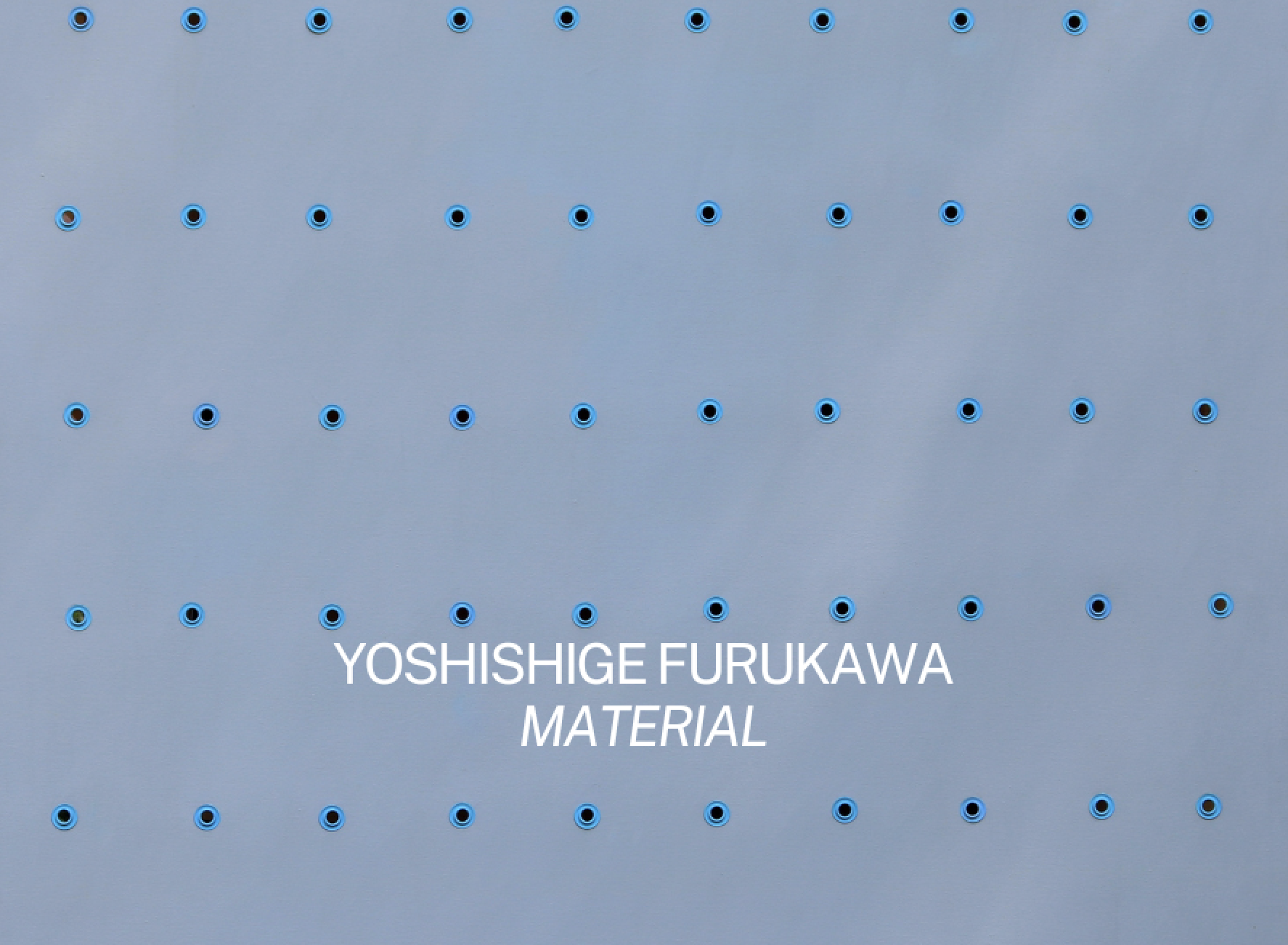
YOSHISHIGE FURUKAWA: MATERIAL
October 16 - December 18, 2026
opening reception Friday, Oct. 16 (6-8pm)
A selection of works by Japanese artist Yoshishige Furukawa (1921-2008).
[read the full article by Rob Clayton for Hyperallergic hereunder]
Yoshishige Furukawa spent his career testing the limits of painting through a dedicated engagement with American art trends and unconventional materials.
Maus Contemporary is thrilled to present works from Furukawa’s series of 1960’s and 1970’s process-based paintings, a body of work which began in the second half of the 1960’s and evolved throughout the early 1970s.
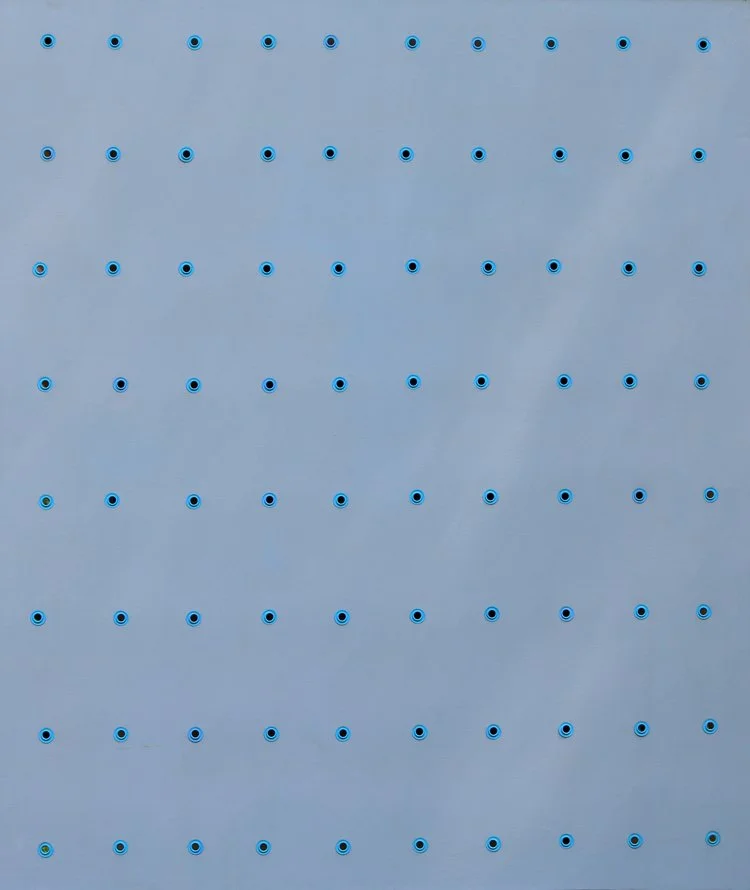
A formal evolution is evident in a chronological examination of the works from Furukawa’s process-based works. The earliest paintings are monochrome yet playful due to Furukawa’s use of rough geometric shapes, where edges of appliqued canvas are allowed to fray, and grommets and the heads of nails run a wavering line across the composition. White paint unifies these elements while highlighting their forms; as time progresses, however, Furukawa rejects this whitewashing in order to showcase the inherent colors and textures of his materials. Raw canvas ripples across these picture planes, alongside sheets of rubber whose uneven surfaces, flaws, and rips are elevated into artistic gestures. The anthropomorphic aspect of these works becomes increasingly evident as the series progresses.
Furukawa wrote in 1997 that, “I am most interested in developing a visual space with color and forms on a visual plane…When I am out walking, I may see a road, a construction site, working people, a tree, or the sky, and I try to incorporate the feeling of these visual physical things in my work. All of them have the power to cause me to ponder the relationship between the physical shape or material and mental reaction.” In the Black Rubber Sheet series, Furukawa’s experience of the 70s—New York City streets, Minimalist art—is distilled into these evocative works, which gesture at many things while remaining ambiguous, and a bit coy.

click on HYPERALLERGIC logo to read the review Rob Clayton wrote on Yoshishige Furukawa's exhibition "Black Rubber Sheet" for Hyperallergic.
Yoshishige Furukawa spent his career testing the limits of painting through a dedicated engagement with American art trends and unconventional materials.
A formal evolution is evident in a chronological examination of the works from Furukawa’s Black Rubber Sheet series. The earliest paintings are monochrome yet playful due to Furukawa’s use of rough-hewn geometric shapes, where edges of appliquéd canvas are allowed to fray, and grommets and the heads of nails run a wavering line across the composition. White paint unifies these elements while highlighting their forms; as time progresses, however, Furukawa rejects this whitewashing in order to showcase the inherent colors and textures of his materials. Raw canvas ripples across these picture planes, alongside sheets of rubber whose uneven surfaces, flaws, and rips are elevated into artistic gestures. The anthropomorphic aspect of these works becomes increasingly evident as the series progresses: peachy-pink canvas resembles skin; a crevice formed between grommet-pinched sheets of rubber appears like a corset.
Furukawa wrote in 1997 that, “I am most interested in developing a visual space with color and forms on a visual plane…When I am out walking, I may see a road, a construction site, working people, a tree, or the sky, and I try to incorporate the feeling of these visual physical things in my work. All of them have the power to cause me to ponder the relationship between the physical shape or material and mental reaction.” In the Black Rubber Sheet series, Furukawa’s experience of the 70s—New York City streets, Minimalist art—is distilled into these evocative works, which gesture at many things while remaining ambiguous, and a bit coy.
Japanese artist Yoshishige Furukawa’s paintings shown in the Black Rubber Sheet exhibition date from 1972 to 1976, and are part of, or relate to, the artist’s important and rare black-rubber-sheets series created while living in New York, where the artist moved to from Japan in 1963. The non-color of black and the solid sense of the material of rubber reflected a rather reticent and ascetic impression of 1970’s art. Despite this, the various variations that were woven by the black geometric forms in triangles, squares and polygons continued to evoke dynamic senses of motion and expression that were alike in appearances but different in nature from the regularly repetitive element inherent to Minimalism.
Furukawa’s Oeuvre was recently the subject of a major retrospective at the Fukuoka Prefectural Museum of Art. The paintings shown here were included in said retrospective, and several of them are included in the exhibition’s publication.
- Rob Clayton for Hyperallergic, February 11, 2016

click on ARTSY logo to read the article by M. Osberg for Artsy.
Yoshishige Furukawa
Untitled
1971
oil, enamel, and metal grommets on canvas
approx. 65 by 55.5 in.
(ca. 165,1 by 141cm)